

Browse our curated list of Digital Marketing Companies
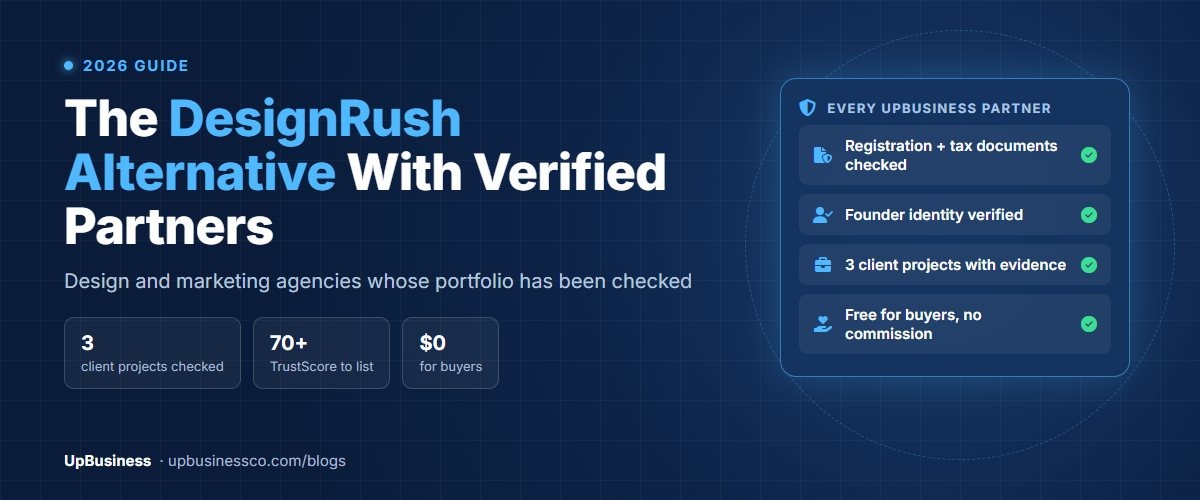
UpBusiness is a DesignRush alternative for businesses hiring a design, branding, web or marketing agency they can actually check. You describe the project once and get three agencies matched to it, and every one of them has been through a five-step onboarding where our team reviews its registration documents, its founder's identity and three real client projects, including evidence of the work. It's free for buyers, there's no commission, and it works for buyers and agencies anywhere in the world.
If you only have a minute
- Creative work is judged on the portfolio, so every UpBusiness partner company submits three client projects with evidence of the work and proof it was really theirs.
- We can email those clients to confirm the project, and confirmed projects earn extra trust points.
- Only agencies with a TrustScore of 70 or more out of 100 are listed.
- You get three matched agencies free, and can shortlist and compare others side by side.
Why Buyers Look for a DesignRush Alternative
DesignRush lists agencies across branding, web, marketing and software, and says reviews are the most important factor in its organic rankings. It verifies reviewers through LinkedIn, with email or phone checks where needed, and agencies can also pay for sponsored placement[1]. That gives you a long, review-ranked list, but it still leaves you to work out whether the beautiful work in an agency's portfolio was really produced by that agency.
UpBusiness starts from the work itself. Before an agency is listed, we look at the projects behind the portfolio and, where we can, ask the client to confirm them.
UpBusiness vs DesignRush at a Glance
| UpBusiness | DesignRush | |
|---|---|---|
| How you find agencies | Post one brief and get 3 matched agencies, or browse categories ranked by TrustScore | Browse a directory ranked largely by reviews |
| Portfolio checks | Three client projects per agency, with evidence and proof of the engagement; clients can be emailed to confirm | Portfolio shown on the profile |
| Company checks | Registration and tax documents, founder identity, achievements with proof | Review and reviewer verification |
| Who can list | Registered businesses with a TrustScore of 70+ | Agencies that apply and are accepted |
| Cost for buyers | Free, no commission | Free to browse |
Why Portfolio Proof Matters More for Creative Work
When you hire a software firm, you can test a demo. When you hire a design or marketing agency, the portfolio is most of what you have to go on, and portfolios are easy to dress up. A strong-looking case study can belong to a former employee's previous agency, a freelancer the agency used once, or a spec project no client ever paid for.
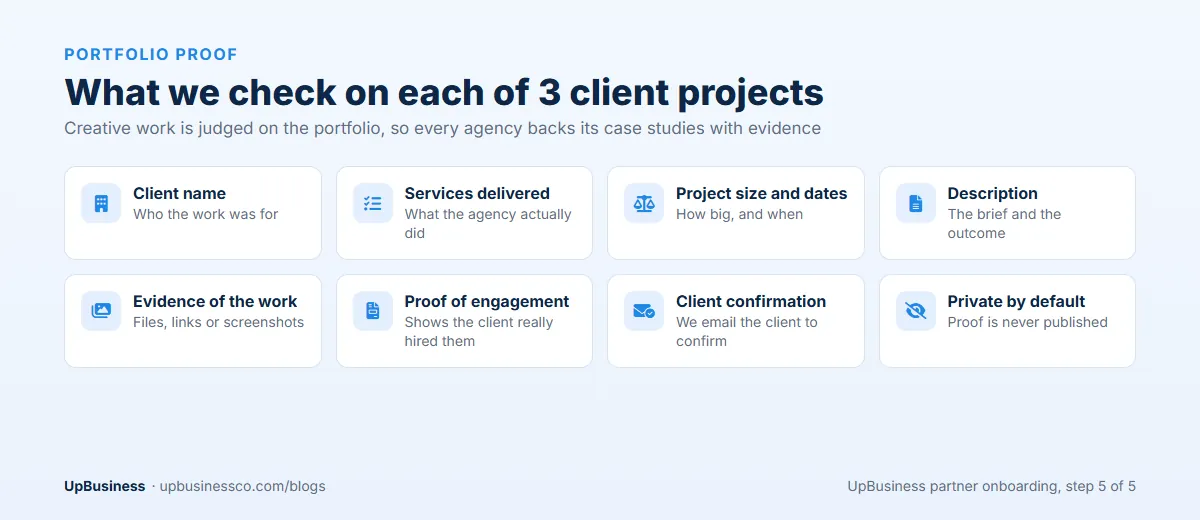
That's why client projects carry so much weight on UpBusiness, up to 27 of the 100 TrustScore points. For each of its three projects an agency gives us the client's name, the project, the services it delivered, the size, the dates and a description, and it uploads evidence of the work along with proof of the engagement itself. If it shares the client's email, we write to the client and ask them to confirm. A project the client confirms earns extra points, and an agency can't reach the listing threshold on looks alone.
The agency decides which of those clients appear on its public profile. The proof documents are used only for verification and are never published.
The Rest of the Five-Step Check
Portfolio proof is one of five onboarding steps, all reviewed by our team by hand.
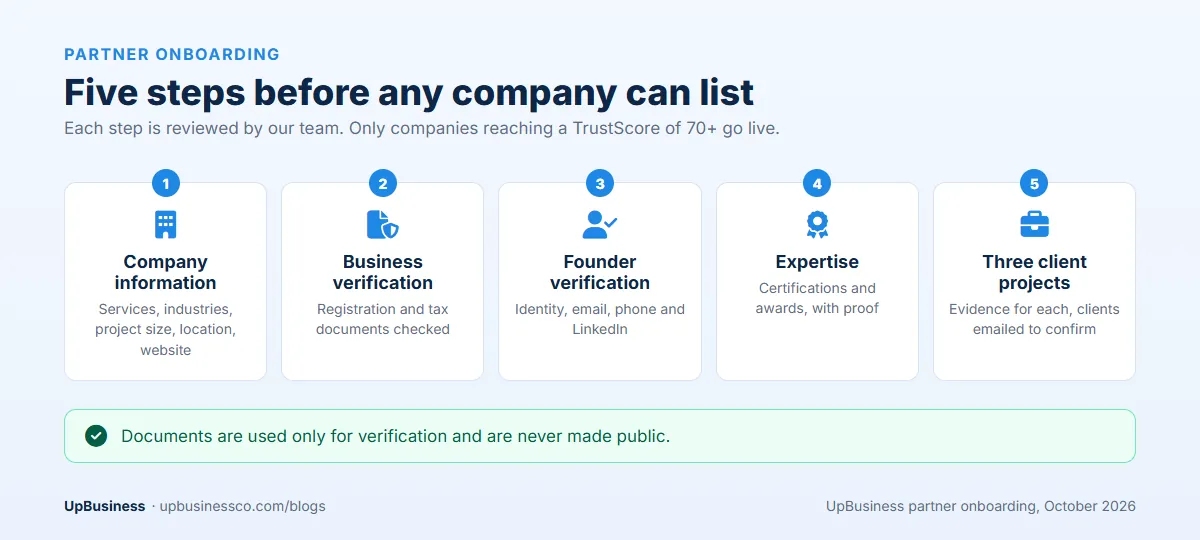
We collect the agency's services, the industries it works in, its typical client size, its minimum project size and rate, its location, website, social profiles and office photos. We check its incorporation certificate and tax registration and credit its years in business from those documents, and we verify the founder's identity, email, phone and LinkedIn profile. Awards and certifications only count when they come with a link or a document to back them up, which matters in a field where "award-winning" appears on almost every agency homepage.
All of it adds up to a TrustScore out of 100. Agencies need 70 to be listed. Optional paid plans can move a listed agency higher in the default "Recommended" order on category pages, but they can't get an agency listed without passing the same checks.
What a Good Creative Brief Includes
Agencies quote what you describe, and creative briefs tend to be vaguer than technical ones, which is why the quotes you get back can differ by five times. A one-page brief with these points gets far more comparable answers.
- What the work has to achieve, in business terms. "More demo requests from mid-sized retailers" is something an agency can design for; "a modern look" isn't.
- Who it's for, with a sentence or two on the customer you want to reach.
- The exact deliverables, such as a logo with usage guidelines, a 12-page website, or three months of paid social with a monthly report.
- What you already have, from brand assets and photography to an existing site, ad accounts and past results.
- Two or three references you like and one you don't, with a line on why.
- Your budget range and the date that actually matters, like a launch or a trade show.
- What you need to own at the end, covered in the next section.
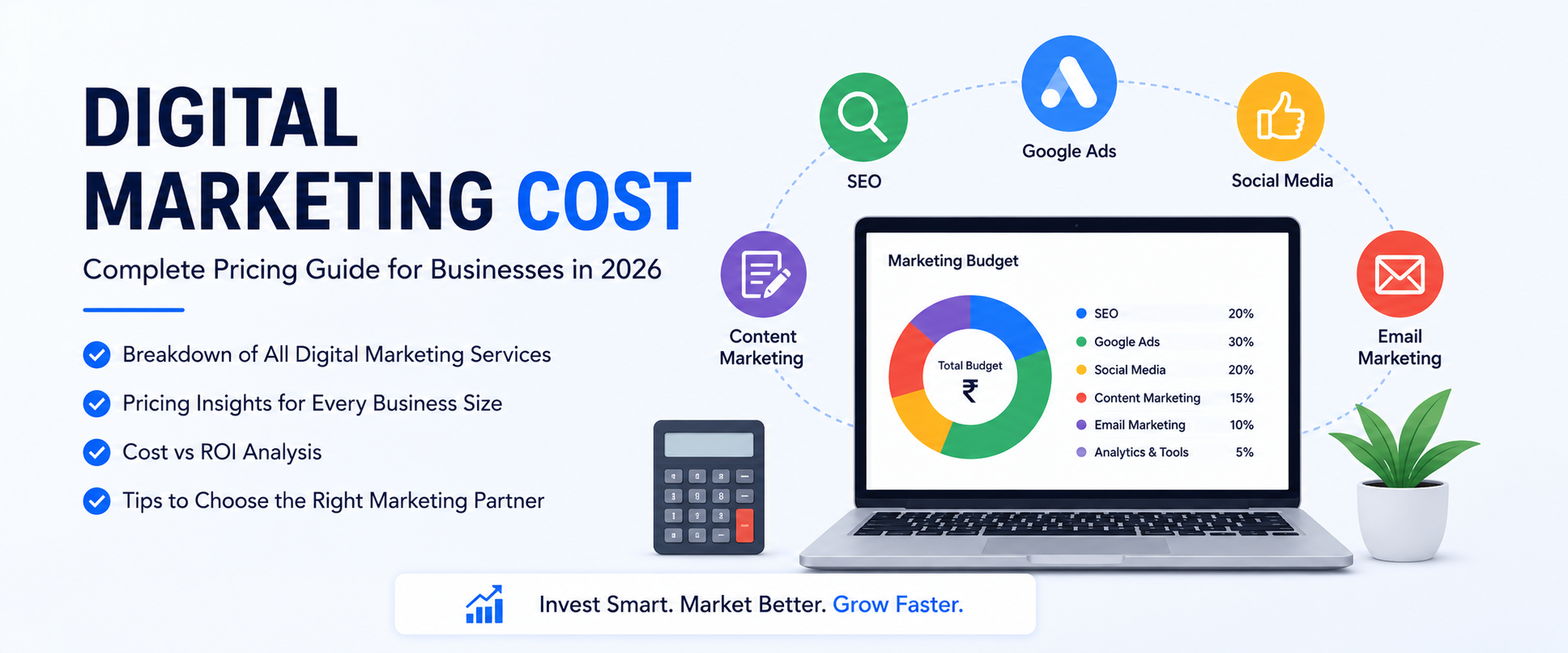
Our digital marketing cost guide helps you set a realistic range before you write the budget line.
Red Flags in an Agency Pitch
Most agencies are honest, but a few patterns come up often enough that they're worth knowing before the first call.
- Guaranteed results such as first-page rankings or a fixed number of leads. Nobody controls Google or your market, and our SEO agency pricing guide explains what a realistic SEO promise looks like.
- A portfolio full of big brand names with no detail on what the agency actually did for them.
- Ad accounts, domains or social profiles set up in the agency's name instead of yours.
- A long minimum retainer with no exit clause, especially for marketing work that hasn't been tested yet.
- A request for unpaid "spec" designs as part of the pitch. Good agencies charge for creative work, and free concepts tend to be rushed.
- No named person who will run your account day to day.
Who Owns the Work at the End
Ownership causes more disputes in creative work than price does, because files and accounts are easy to leave with the agency by accident. Before you sign, get these in writing.
The final artwork should come to you along with the editable source files (Figma, Illustrator or After Effects), not just PNGs and PDFs. Fonts and stock images should be licensed in your company's name, or you should be told clearly which ones you'll need to buy. Ad accounts, analytics, the domain, hosting and social profiles should be created under your business and shared with the agency, so you keep the history if you part ways. And copyright in the work should pass to you once it's paid for. A good agency will agree to all of this without fuss, and the contract checklist we wrote for software projects covers the same clauses in more detail.
What You Can Hire
UpBusiness covers more than 5,000 specific services across 10 categories. On the creative and marketing side that includes branding and logo design, UI/UX and website design, 3D and video, SEO, paid ads, social media, content and e-commerce marketing. If you're unsure what your project counts as, post it anyway, because the matching looks at what you need done.
If you're budgeting a marketing engagement, our guides to digital marketing cost and SEO agency pricing give you a sense of typical ranges before you post.
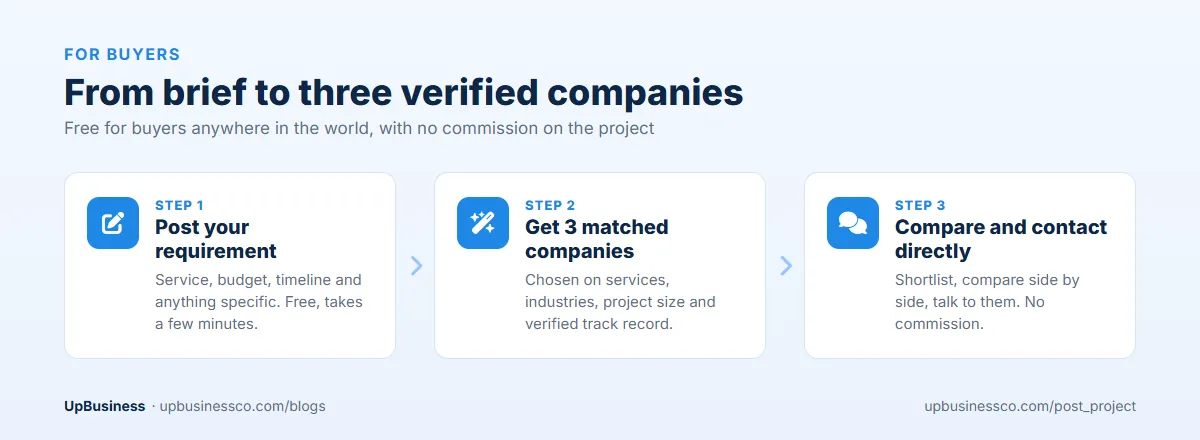
Post your requirement free and get 3 verified agencies
Agency, Freelancer or In-House Designer?
Before you compare agencies, it's worth checking an agency is what you need. Each option has a clear sweet spot.
| Option | Best for | Watch out for |
|---|---|---|
| Freelancer | One defined piece of work, like a logo, a set of illustrations or a landing page | Availability, and nobody to step in if they're busy or unwell |
| Agency | Work that needs strategy plus several skills, such as a rebrand with a new website, or a multi-channel campaign | Paying for senior people in the pitch and getting juniors on the work |
| In-house designer or marketer | A steady, ongoing flow of work across the year | The cost of hiring, and one person can't cover every skill |
Many growing businesses mix them. An agency builds the brand and the website, an in-house marketer runs it day to day, and freelancers fill gaps at busy times. If you're at that stage, ask agencies on your shortlist whether they'll hand over guidelines and templates your own team can use, because the best ones plan for that from the start.
Shortlist and Compare Agencies
Beyond the three matches, you can browse any category and shortlist the agencies you like. The shortlist compares them side by side on TrustScore, reviews and ratings, industry experience, commercial fit, portfolio quality, case studies and responsiveness. Add your own notes, save the list and share it with your marketing lead or co-founder before you make the call.
When DesignRush Still Makes Sense
A big review-ranked directory is useful when you want to see a wide spread of agencies across many cities and specialisms, or when you're researching who your competitors have worked with. Plenty of buyers browse a directory first to get a feel for the market and then post a brief on UpBusiness to get three checked agencies that fit their budget.
If you're comparing other ways to hire, our Clutch alternative and GoodFirms alternative guides look at how those directories rank firms, and the Fiverr alternative guide explains when a quick gig is a better buy than an agency.