


Browse our curated list of Software Testing Companies
Software testing cost in 2026 ranges from a few hundred dollars for one round of manual testing by a team in India to more than $16,000 for an automated regression suite built by a US team. The price mostly follows what you need tested, whether the testing is manual, automated or both, and where the testers are based. A single test cycle before an MVP launch and a QA process running alongside every release are different purchases. The same scope also costs several times more with a US team than with an Indian one.
This guide is for CTOs, product owners and founders who are budgeting for QA or comparing quotes from testing partners. It gives QA testing cost by scope and by country, tester hourly rates and the price of the tools and device clouds that testing needs. It also shows when automation pays for itself, what a testing quote should include, and what the evidence says about the cost of bugs found late. Labour costs are worked out the same way for every country from US Bureau of Labor Statistics and Stack Overflow salary data, and tool prices come from each provider's own pricing page.
Key takeaways
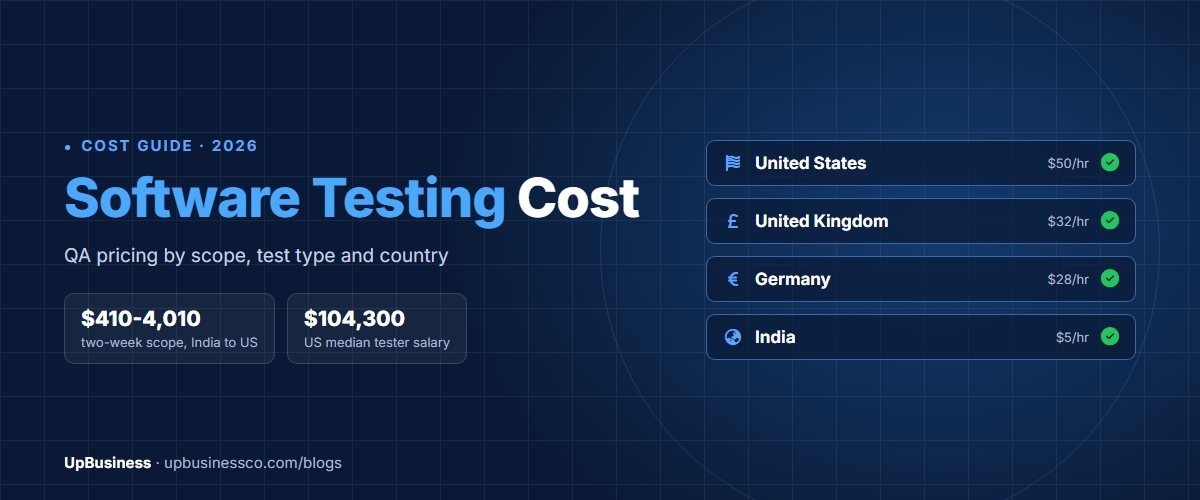
- The median US software QA analyst or tester earns $104,300 a year, according to the Bureau of Labor Statistics. Our estimates for the same role are about $65,530 in the UK, $57,840 in Germany and $10,700 in India.
- A two-week testing scope, such as a test plan with one manual test cycle, costs roughly $4,010 in US salary, $2,520 in the UK, $2,220 in Germany and $410 in India, before a partner's overheads.
- An automated regression suite of about 8 person-weeks pays for itself after roughly 14 regression runs it replaces, or about six to seven months of fortnightly releases.
- Budget for tools as well as people. Automated cross-browser testing starts at about $79 to $99 a month per parallel test session, and real mobile devices cost about $0.17 a device minute on AWS Device Farm.
How Much Does Software Testing Cost in 2026?
Based on the scopes in this guide, a software testing project costs about $400 to $16,000 in tester salary, depending on the work and the country of the team. Ongoing QA costs about $890 to $8,690 a month for one dedicated tester. The table below shows typical effort for common testing scopes, so you can see where your project sits before you ask for quotes.
| Testing scope | Typical effort | What's usually included |
|---|---|---|
| Test strategy and one manual test cycle | 2 person-weeks | Test plan, test cases for main user flows, one full cycle, bug reports |
| Performance or load test | 2 person-weeks | Load model, scripts, one test cycle on a staging copy, results and bottlenecks |
| Accessibility audit | 2 person-weeks | WCAG 2.2 AA checks on key pages and flows, issue list with fixes |
| Mobile app release testing | 4 person-weeks | iOS and Android on real devices, functional and compatibility testing |
| Automated regression suite | 8 person-weeks | About 200 automated tests for web and API, run in your CI pipeline |
| Ongoing QA | One tester, full time | Testing each release, regression, bug triage and test maintenance |
The effort figures are UpBusiness estimates for a testing partner working on a typical web or mobile product. Larger products, regulated industries and many supported devices increase them.
Software Testing Cost by Country
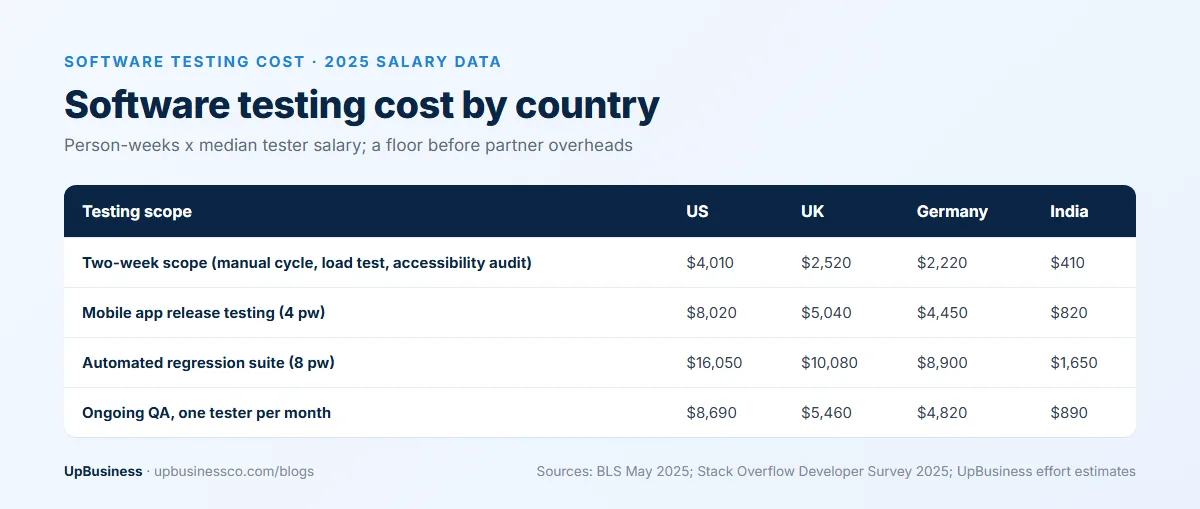
| Testing scope | US | UK | Germany | India |
|---|---|---|---|---|
| Two-week scope (manual cycle, performance test or accessibility audit) | $4,010 | $2,520 | $2,220 | $410 |
| Mobile app release testing (4 person-weeks) | $8,020 | $5,040 | $4,450 | $820 |
| Automated regression suite (8 person-weeks) | $16,050 | $10,080 | $8,900 | $1,650 |
| Ongoing QA, one tester per month | $8,690 | $5,460 | $4,820 | $890 |
These are salary floors. Testing partners add test management, tools, devices, project management and margin on top.
How we calculated these figures
For the US we use the Bureau of Labor Statistics median wage for software quality assurance analysts and testers: $104,300 a year in May 2025, against $135,980 for software developers [1]. Stack Overflow's 2025 Developer Survey does not publish tester salaries by country. For the UK, Germany and India we therefore apply the US ratio between tester and developer pay (0.77) to Stack Overflow's 2025 median full-stack developer salaries in each country [2]. As a check, the same method gives about $105,800 for the US, within 2% of the official figure. Stack Overflow's global median for developers in QA or test roles is $57,443.
Software Tester Hourly Rates
Dividing those annual salaries by 2,080 working hours gives the salary cost of one tester hour in each country.
| Country | Estimated annual salary | Salary cost per hour |
|---|---|---|
| United States | $104,300 (BLS median) | About $50 |
| United Kingdom | $65,530 | About $32 |
| Germany | $57,840 | About $28 |
| India | $10,700 | About $5 |
Partner companies charge more than these figures, because an hourly rate also covers unbilled time, management, tools, devices and profit. Use the salary cost to judge how much of a quote is overhead, and ask what each role on the team costs.
Cost by Type of Testing
Each type of testing needs different skills and tools, so prices differ even for the same number of days.
- Functional and manual testing. Testers follow test cases through each feature and report bugs. The cheapest per day, but it repeats with every release.
- Regression testing. Re-checks existing features after each change. Usually manual at first, and a strong candidate for automation once releases are frequent.
- API testing. Checks the services behind the app. Fast to automate with tools such as Postman, whose Team plan costs $19 per user a month [3].
- Performance and load testing. Measures speed and stability under traffic. Cloud load testing such as Grafana Cloud k6 starts with a $19 monthly platform fee plus usage from $0.15 per virtual-user hour [4].
- Mobile and compatibility testing. Runs the app on many devices, browsers and operating system versions, which is why device clouds are a large part of mobile QA cost.
- Accessibility testing. Checks the product against WCAG. The WebAIM Million 2026 study found detectable WCAG failures on 95.9% of the top one million home pages, with an average of 56.1 errors per page [5].
- User acceptance testing. Your own staff or customers confirm the product does what the business needs. A partner can prepare the scripts and track results, but the sign-off should come from your side.
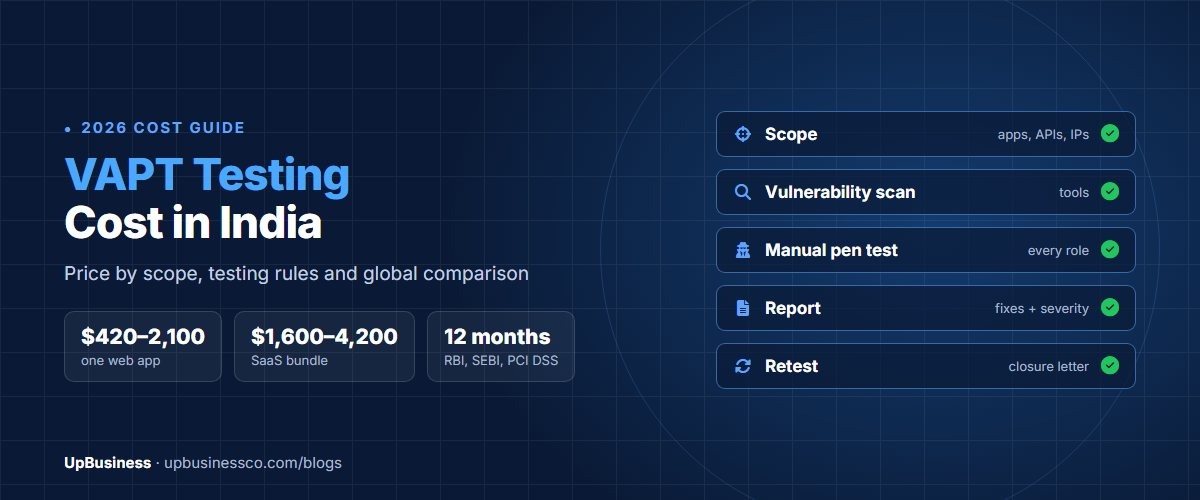
- Security testing. Penetration testing and vulnerability assessment are specialist work with their own pricing. See our VAPT testing cost guide.
Testing Tools and Device Cloud Costs
Testing partners often use paid tools, and some ask the client to hold the subscriptions. These are list prices on 19 October 2026.
| Tool | What it does | List price | Source |
|---|---|---|---|
| BrowserStack Automate (Desktop) | Automated tests on real browsers | $99 a month per parallel session, billed yearly | BrowserStack [6] |
| BrowserStack Live (Desktop and Mobile) | Manual testing on real browsers and devices | $39 a month per user, billed yearly | BrowserStack [6] |
| TestMu AI (formerly LambdaTest) Web Automation | Automated browser testing | $79 a month, billed yearly | TestMu AI [7] |
| Sauce Labs Real Device Cloud | Testing on real mobile devices | $199 a month billed yearly, $249 monthly | Sauce Labs [8] |
| AWS Device Farm | Real Android and iOS devices on demand | $0.17 per device minute, or $250 a month per unmetered slot | AWS [9] |
| TestRail Professional | Test case management | $38 per user a month, billed yearly | TestRail [10] |
One change to plan for: Google has deprecated Firebase Test Lab and will shut it down fully on 30 September 2027 [11]. If a partner proposes it for mobile testing, ask what they will move to and what that will cost.
Manual vs Automated Testing: When Automation Pays Off
Automation costs more up front and less on every release after that. A simple way to estimate the break-even point is to compare the cost of building the suite with the cost of the manual runs it replaces.
Take a web application with about 200 regression tests. Running them by hand takes one tester about three days, or 0.6 of a person-week, which is roughly $1,200 in US salary or $120 in India. Automating them takes about 8 person-weeks, or $16,050 in the US and $1,650 in India. In both countries the suite pays for itself after about 14 regression runs it replaces. With a release every two weeks, that is six to seven months, before counting the time needed to keep the tests up to date.
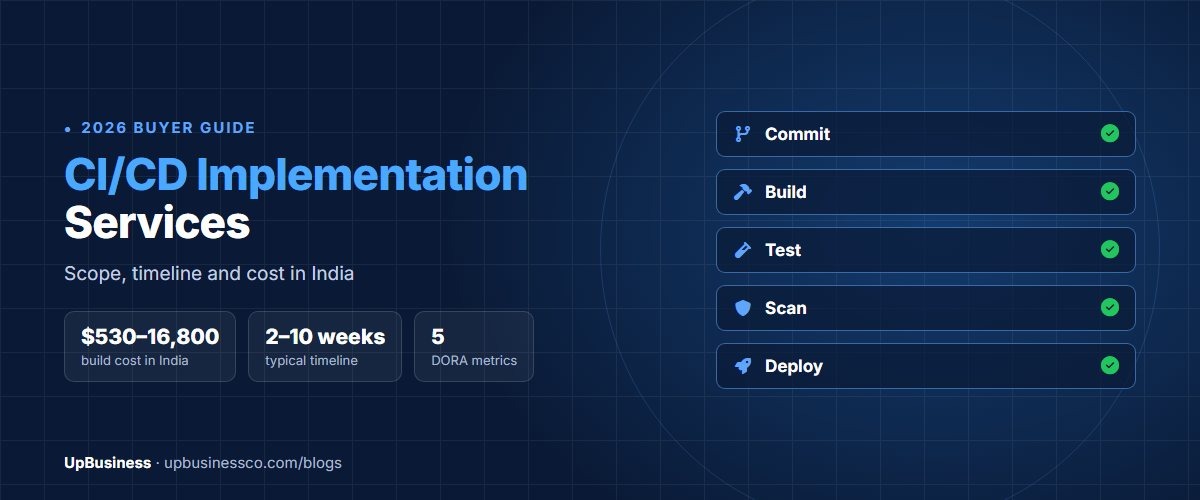
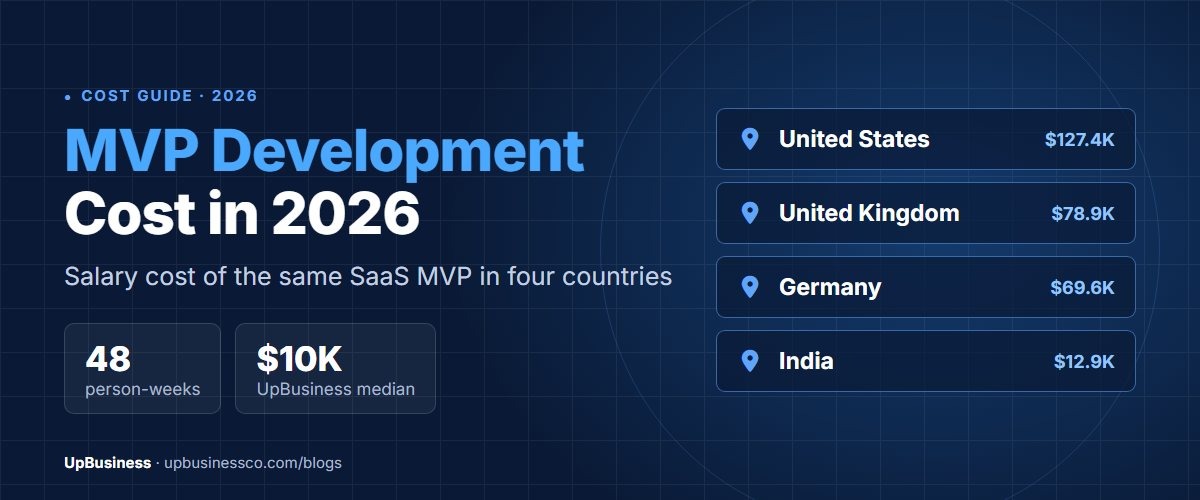
Automation makes sense when you release often, the product is stable enough that tests will not need rewriting every sprint, and you have a CI pipeline to run them in. Our guide to CI/CD implementation services covers that pipeline. For a new MVP that is still changing weekly, start with manual testing of the main user flows. Our MVP development cost guide shows how testing fits into an early budget.
In-House QA vs Outsourced Testing
An in-house tester costs the full salary plus benefits, equipment, tools and management time, and you pay for them in quiet weeks as well as busy ones. The Bureau of Labor Statistics counted 187,600 software QA analysts and testers in the US in 2025, with employment projected to grow 6% by 2035 [1]. Hiring an experienced tester can take months in a market like that.
An outsourced partner makes sense when testing needs come in bursts around releases, when you need specialist skills such as performance, accessibility or automation for a short time, or when you need many real devices without buying them. An in-house tester makes sense when you release every week, the product is complex enough that domain knowledge matters every day, or testing must happen inside your own network.
A common middle path is one in-house QA lead who owns the test strategy and release decisions, with a partner company running regression, device and performance testing. Agree in the contract that test cases and automation code belong to you, so the work stays with you if you change partners.
What Bugs Cost When Testing Is Skipped
One widely cited estimate comes from the Consortium for Information and Software Quality. Its 2022 report put the cost of poor software quality in the US at no less than $2.41 trillion, a figure that includes operational failures, failed projects and technical debt [12].
A study focused on testing itself is older. A 2002 report for the US National Institute of Standards and Technology estimated that inadequate testing infrastructure cost the US economy $59.5 billion a year, and that $22.2 billion of it could be saved with feasible improvements [13]. It also found that more than half of software bugs were not found until late in development or after release.
You will often see the claim that a bug costs 100 times more to fix after release. Researchers who traced that figure found it comes from internal IBM training notes from around 1981, with no published data behind it [14]. The general direction, that bugs found later cost more to fix, is still widely accepted. Use it as a reason to test early, not as a precise multiplier in a business case.
How AI Is Changing Software Testing in 2026
Nearly nine in ten organisations are now trying AI in testing. The World Quality Report 2025-26 surveyed more than 2,000 senior executives in 22 countries and found 89% are piloting or deploying generative AI in quality engineering, with 37% using it in production [15]. Only 15% have scaled it across the company, and the average productivity gain reported was 19%, while a third saw minimal gains.
For buyers, the practical effect is that test case writing and test maintenance should get faster. Ask partners where they use AI, how they review its output, and whether the time saved shows up in the quote.
AI also creates new testing work. If your product includes AI features, such as a chatbot or automated recommendations, someone has to test how they behave with unusual inputs, check the answers against a set of known examples, and repeat those checks whenever the underlying model changes. Include this in the scope if it applies to you, because many standard testing quotes leave it out.
Software Testing Cost Estimation: What a QA Quote Should Include
A clear testing quote lets you compare partners on the same terms. Check that each one covers:
- Scope: which features, platforms, browsers and devices are in and out.
- Test types: the kinds of testing included, such as functional, regression, API or performance, with the effort for each.
- Manual vs automated split: how many tests will be automated, and in which framework.
- Environments and data: who provides the test environment and test data, and how personal data is protected.
- Tools and devices: the tools used and whose account they sit in, with their cost shown separately.
- Bug reporting: the bug tracker used, how severity is set and how fast critical bugs reach you.
- Reporting: a summary after each cycle with test coverage, pass rates and open bugs.
- Ownership and maintenance: who owns the test cases and automation code, and who keeps them working as the product changes.
Our guide to comparing software development proposals applies the same line-by-line approach to development quotes.
How to Reduce Software Testing Cost Without Cutting Quality
- Test the riskiest flows first. Put the most effort on flows where a failure costs money or trust, such as sign-up, checkout, payments and data changes.
- Write acceptance criteria before development. Clear criteria turn into test cases quickly and cut back-and-forth over what counts as a bug.
- Automate only stable, repeated checks. Regression and API tests repay automation; screens that change every sprint usually do not.
- Use device clouds instead of buying devices. Pay per minute or per month for the devices your users actually have.
- Run tests in your CI pipeline. Bugs caught on the day they are written are cheaper to fix than bugs found in a release cycle.
- Keep test environments close to production. Many late bugs come from differences in data, configuration or third-party services.
Pricing Models for Testing Services
- Fixed price per scope. Best for a defined piece of work such as one test cycle, a performance test or an accessibility audit.
- Time and materials. Hourly or daily rates for work whose size is hard to fix in advance. Ask for a cap.
- Dedicated tester or team. A monthly fee for one or more testers working on your product, common for ongoing QA.
- Managed QA per release. A set fee for testing each release. It suits products with a regular release cycle.
What UpBusiness Partner Data Shows
On UpBusiness, 7 verified companies list software testing among their services. The average project sizes they report run from $100 to $25,000, with a median of $10,000, and their TrustScores sit between 70 and 76. Team sizes range from under 10 people to more than 200. All 7 are based in India and work with clients worldwide. These are self-reported figures from a small group, so use them as a reference point when you compare quotes.
Find a Software Testing Partner on UpBusiness
You can compare verified software testing companies on UpBusiness by TrustScore, team size, location and project size. If testing is part of a larger build, see custom software development and mobile app development partners, and for security work see cybersecurity companies. Or post your project once, using the quote checklist above as your brief, and compare the replies line by line. Our software development cost benchmark adds wider project cost data from 53 verified companies.
The Bottom Line
Software testing cost depends on the scope, the mix of manual and automated work, the tools and devices involved, and where the testers are based. A two-week testing scope costs a few hundred dollars in Indian tester salary and about $4,000 in US salary, and one full-time tester costs about $890 to $8,690 a month across the four countries in this guide. Decide what has to be tested first, automate once releases are frequent and the product is stable, and ask every partner to quote against the same checklist.