


Browse our curated list of Website Maintenance Companies
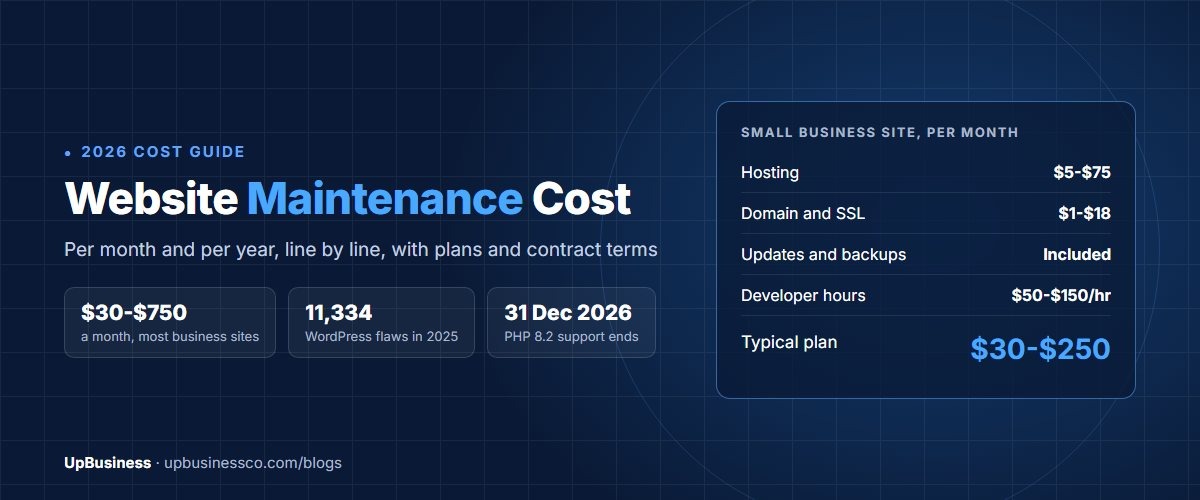
Website maintenance cost for most small and mid-size business sites runs from about $30 to $750 a month, or roughly $360 to $9,000 a year. That covers hosting, renewals, updates, security and a few hours of developer time. Ecommerce stores and large corporate sites sit higher, often $500 to $5,000 a month. This guide is for the business owner or marketing lead who is about to hire a partner company to look after a website. It breaks the cost into line items, explains why upkeep costs more in 2026 than it did a few years ago, compares monthly plans with hourly billing, and lists what belongs in a maintenance contract.
Key takeaways
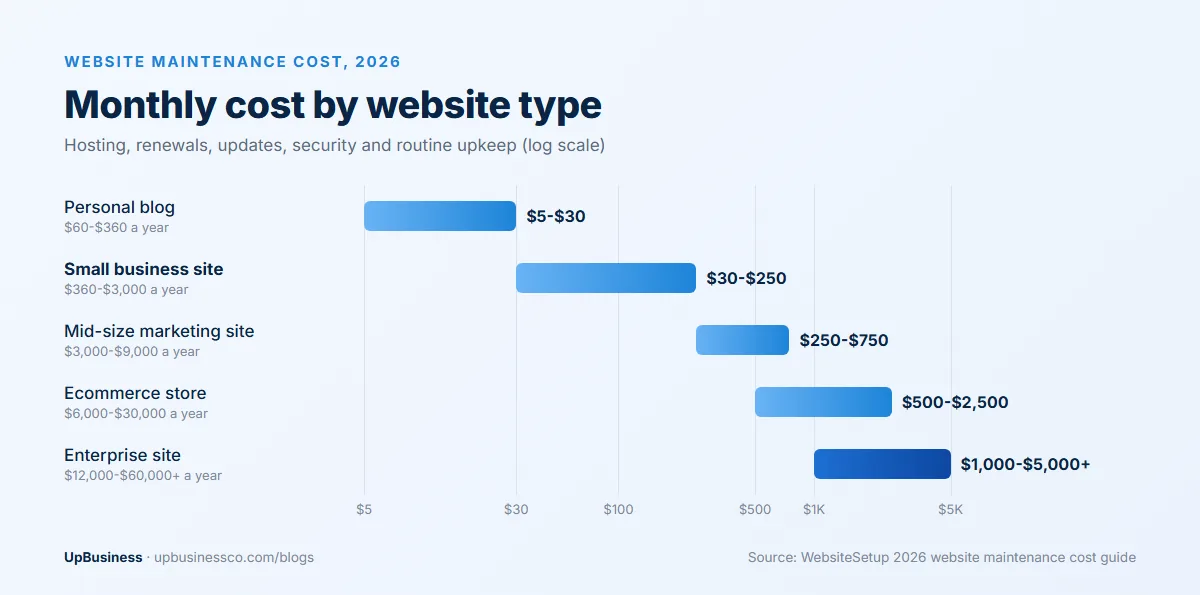
- Published 2026 guides put a small business site at $30 to $250 a month and a mid-size marketing site at $250 to $750. Ecommerce runs $500 to $2,500, and enterprise sites $1,000 to $5,000 or more.
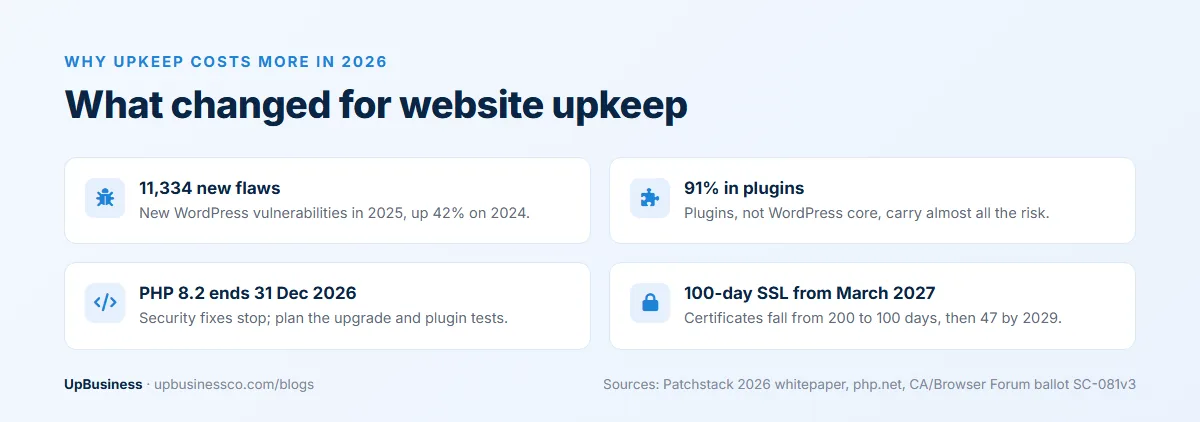
- Patchstack counted 11,334 new WordPress security flaws in 2025, 42% more than in 2024. Plugins accounted for 91% of them.
- PHP 8.2 loses security support on 31 December 2026, and public SSL certificates drop from 200 to 100 days of validity in March 2027. Many sites need upgrade work and automated renewals this year.
- A US web developer's median wage is $92,650 a year (about $44.54 an hour), which explains why agency maintenance hours are commonly billed at $50 to $150.
How Much Does Website Maintenance Cost?
Expect about $30 to $250 a month for a small business site and $250 to $750 for a larger marketing site. An online store runs $500 to $2,500, and a corporate or enterprise site $1,000 to $5,000 or more[1]. The figure depends mostly on how much developer time the plan includes, not on hosting.
| Website type | Monthly cost | Yearly cost | What drives it |
|---|---|---|---|
| Personal blog or portfolio | $5 to $30 | $60 to $360 | Hosting, domain, automatic updates |
| Small business website | $30 to $250 | $360 to $3,000 | Updates, backups, occasional text and image changes |
| Mid-size business or marketing site | $250 to $750 | $3,000 to $9,000 | Forms, CRM links, tracking checks, regular content |
| Ecommerce store | $500 to $2,500 | $6,000 to $30,000 | Payment and stock plugins, checkout testing, seasonal changes |
| Corporate or enterprise site | $1,000 to $5,000+ | $12,000 to $60,000+ | Many pages and integrations, uptime targets, compliance |
Ranges are from WebsiteSetup's 2026 cost guide[1]. Other published guides land in the same place. Apexure puts a typical small business plan at $50 to $500 a month[2]. In its words, a $50 plan is hosting plus automatic updates, while a $500 plan is a person who checks the site every month and fixes what they find.
Website Maintenance Cost Per Month and Per Year, Line by Line
A maintenance quote is easier to judge once you split it into what you'd pay anyway and what you're paying a person to do. The first group is small and predictable. The second is where quotes differ by ten times.
| Cost item | Typical price | How often |
|---|---|---|
| Domain renewal | $10 to $25 | Yearly |
| Hosting or website builder plan | $5 to $75 | Monthly |
| SSL certificate | $0 to $200 (free with most hosts) | Yearly |
| Premium plugins, themes and extensions | $0 to $500 | Yearly |
| Security tools and offsite backups | $0 to $300 | Monthly |
| Content writing and updates | $25 to $60 an hour | As needed |
| Design updates | $40 to $90 an hour | As needed |
| Developer support and fixes | $50 to $150 an hour | As needed |
Prices are from WebsiteSetup's line-item breakdown[1]. Add the fixed items for a typical small business site and you get roughly $150 to $1,000 a year before anyone touches the site. Everything above that is labour, which is why the hours included in a plan matter more than its headline price.
What Website Maintenance Includes
A complete plan covers seven jobs. Many cheaper quotes cover four or five, so check which ones are missing before you compare prices.
- Hosting, domain and email renewals, either passed through at cost or bundled into the fee.
- Core, plugin and theme updates, tested on a staging copy before they go live.
- Security monitoring, a firewall and daily offsite backups, with a restore tested at least once a quarter.
- Fixes when something breaks, with a stated response time.
- Content changes such as new pages, price updates, team photos and blog uploads.
- Form, tracking and checkout checks, so leads and sales data keep flowing.
- Speed and uptime monitoring, with a short monthly report of what was done.
| How often | Tasks |
|---|---|
| Weekly | Plugin and core updates, backup check, uptime and error log review |
| Monthly | Form and checkout test, broken link scan, speed check, security scan report, content changes |
| Quarterly | Restore a backup to staging, review user accounts and passwords, remove unused plugins |
| Yearly | Domain and licence renewals, PHP and server version review, accessibility and content audit |
Form and tracking checks are easy to leave out of a quote, and they're expensive to miss. A contact form that silently fails for three weeks can cost more in lost enquiries than a year of a good plan.
What happens if you skip maintenance
Nothing, for a while. Then several small problems arrive together. An outdated plugin with a public flaw becomes an easy target, and attackers move quickly once a flaw is published. A host upgrades PHP and an old theme stops loading. A certificate renewal fails and browsers warn visitors that the site isn't secure. Forms stop sending emails after a mail setting changes. Each of these is cheap to prevent and slow, stressful and expensive to fix after the fact, usually at an urgent hourly rate. Restoring a hacked site can also mean cleaning up search results and contacting customers whose details were exposed.
Why Website Maintenance Costs More in 2026
Three changes have made upkeep harder to skip and slightly more expensive than it was a few years ago.
More security flaws, exploited faster
WordPress runs 39.6% of all websites and 58.3% of sites whose content system is known[3], so its plugin ecosystem sets the pace for most small business sites. Patchstack recorded 11,334 new vulnerabilities in that ecosystem in 2025, up 42% on 2024. Of those, 91% were in plugins and 9% in themes, while WordPress core had only six, all low priority. Worse, 46% weren't fixed by the developer in time for public disclosure, and the most heavily targeted ones were mass-exploited within a median of 5 hours[4]. A plan that updates plugins "monthly" leaves a very wide window.
PHP 8.2 reaches end of life
WordPress and many custom sites run on PHP. Version 8.2 gets security fixes only until 31 December 2026, version 8.3 until 31 December 2027, and 8.4 until 31 December 2028[5]. Moving up a version usually means testing every plugin and some custom code. Budget a few extra developer hours for it this year, rather than finding an incompatible plugin after your host forces the upgrade.
Shorter SSL certificates
The industry body for certificate authorities voted in April 2025 to shorten public TLS certificates in steps. The maximum fell to 200 days on 15 March 2026, drops to 100 days on 15 March 2027 and reaches 47 days on 15 March 2029[6]. Free certificates from most hosts already renew automatically. If yours is renewed by hand once a year, someone needs to automate it, or the site will start showing security warnings to visitors.
Monthly Plans vs Hourly Billing: How Maintenance Is Priced
Partner companies sell maintenance in four main ways, and the right one depends on how often your site changes.
| Pricing model | Typical price | Best for | Watch out for |
|---|---|---|---|
| Hosting with automatic updates | $5 to $75 a month | Simple sites that rarely change | Nobody checks whether updates broke anything |
| Monthly retainer | $50 to $500+ a month for small sites; agency plans from about $350 | Sites with regular content changes and leads to protect | Unused hours that don't roll over |
| Prepaid hourly block | $50 to $150 an hour | Sites that change in bursts | No proactive checks unless you ask for them |
| In-house staff | Salary plus benefits | Large sites with daily changes | Cover for holidays and sick leave |
As a reference point, WebFX publishes plans from $350 a month for WordPress sites up to 500 pages and $550 for larger WordPress and WooCommerce sites, with extra work at $150 an hour[7]. Agency plans in that bracket usually include daily backups, security scans and a set amount of support time.
Where the hourly rates come from
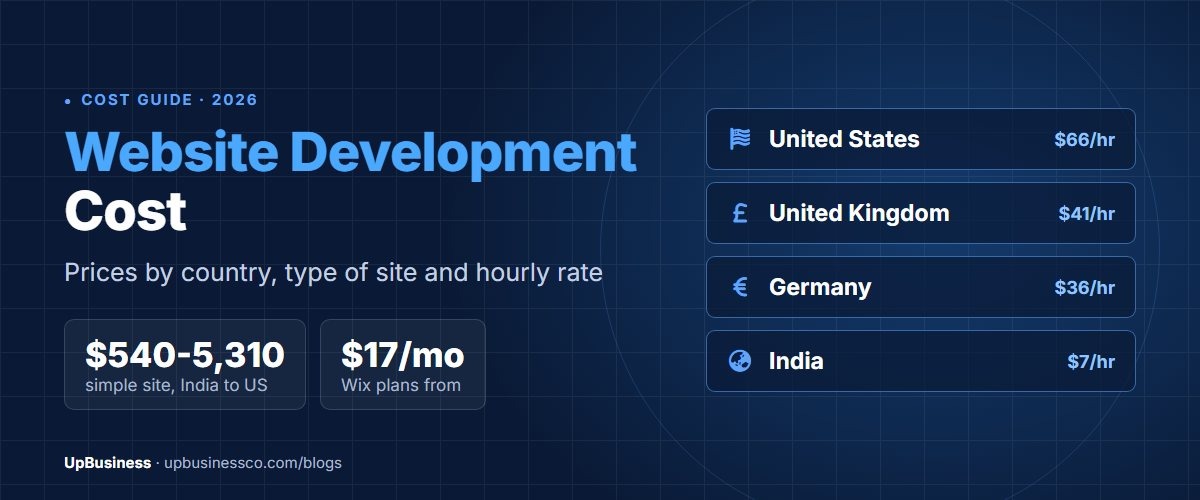
The median US web developer earned $92,650 in May 2025[8], which works out to about $44.54 an hour. Wages make up 70% of what US private employers spend per employee hour, with benefits the rest[9], so an in-house developer costs closer to $64 an hour before office, tools and management. That's why US agency rates of $100 to $150 an hour are normal. Freelancers typically charge $35 to $150 an hour, and agency maintenance packages often run $200 to $2,500 a month[1]. Partner companies in lower-cost countries usually quote well below US rates for the same routine work, which is worth comparing before you sign.
What a block of hours buys
As a rough guide for a small business WordPress site, five hours a month covers weekly updates, monitoring, one backup restore test per quarter and a handful of content changes. Ten hours adds monthly form and checkout testing, speed fixes and a short report. Twenty hours or more suits an online store or a site that publishes several pages a week. Ask each company to say which tasks fit into its plan's hours, in writing.
Website Maintenance Packages: Basic, Standard and Premium
Most partner companies sell three tiers. The names vary, but the contents are similar enough to compare side by side.
| Package | Typical monthly price | Usually includes | Suits |
|---|---|---|---|
| Basic | $50 to $150 | Core and plugin updates, daily backups, security scan, uptime alerts | Brochure sites that rarely change |
| Standard | $150 to $500 | Basic plus staging tests, 2 to 5 support hours, form checks, monthly report | Business sites that bring in leads |
| Premium | $500 to $2,500+ | Standard plus more hours, faster response, speed work, checkout testing, priority fixes | Online stores and busy marketing sites |
The basic and ecommerce price points come from WebsiteSetup's 2026 guide, which puts basic plans at about $50 to $150 a month and agency packages at roughly $200 to $2,500[1]. Before comparing tiers, ask each company for the same three things: the task list, the hours included and the response time for an outage. Two "standard" plans at the same price can differ on all three.
Website Maintenance Cost by Platform
The platform changes who does the work more than the total bill.
- WordPress: you or your partner company handle core, plugin and theme updates and PHP upgrades. It's the most flexible option and needs the most hands-on care.
- Shopify, Wix and Squarespace: the platform handles hosting, security and core updates in the monthly plan, so maintenance is mostly apps, content and design changes. Paid apps can add up quickly on a Shopify store.
- Custom-built sites and web apps: expect a retainer priced on scope, covering framework and dependency updates, server patches, monitoring and developer time.
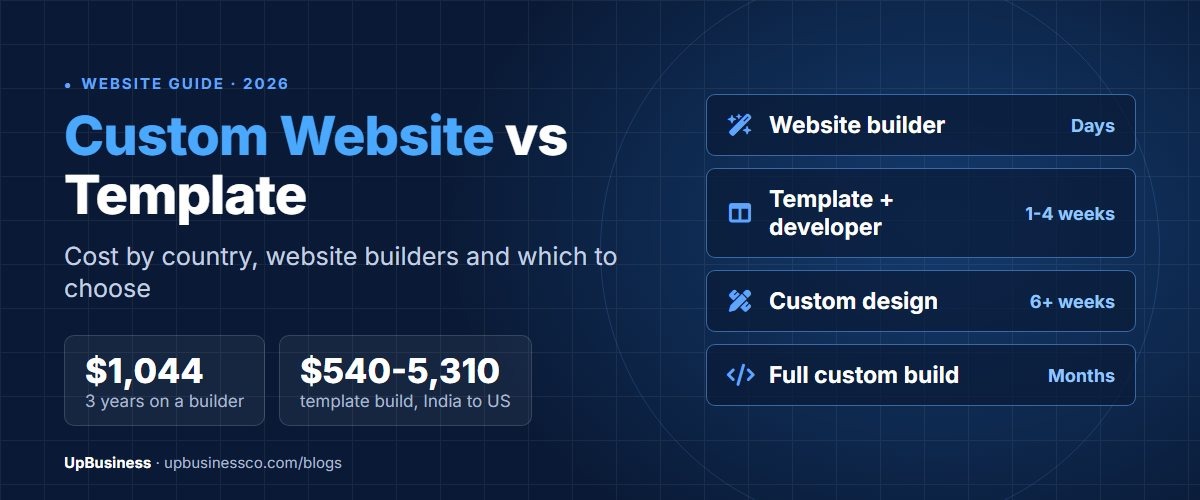
If you're still choosing a platform, our custom vs template website guide compares the trade-offs, and our website development cost guide covers what the build itself costs.
Do It Yourself, Hire a Freelancer or a Partner Company?
| Option | Monthly cost | Good when | The risk |
|---|---|---|---|
| Do it yourself | Hosting and tools only | A simple site and someone with a few hours a month | Updates slip when the business gets busy |
| Freelancer | Hourly, typically $35 to $150 | Small sites with occasional changes | No cover if they're unavailable during an outage |
| Partner company on a plan | $50 to $750 for most business sites | Sites that bring in leads or sales | Paying for hours you don't use |
For most businesses whose website brings in enquiries or sales, a partner company on a small monthly plan with a stated response time is the safer choice. An afternoon of downtime during a campaign can easily cost more than the plan.
What to Put in a Website Maintenance Contract
A short contract saves most of the arguments that come up later. Make sure it covers these points:
- Scope: which of the seven jobs above are included, and what counts as extra work.
- Hours: how many are included each month, the rate for extra hours, and whether unused hours roll over.
- Response times: for example, four business hours for a site that's down and two business days for content changes.
- Backups: how often, where they're stored, how long they're kept, and how often a restore is tested.
- Ownership and access: the domain, hosting account, licences and code stay in your name, and you keep admin access.
- Reporting: a monthly list of updates made, issues found and hours used.
- Exit: notice period, handover of passwords and files, and help moving to a new provider.
Our software development contract checklist covers ownership and exit terms in more detail.
What UpBusiness Website Maintenance Partners Look Like
We looked at the 9 verified partner companies listed on our website maintenance page on 22 October 2026. Their TrustScores run from 70.24 to 75.85 out of 100, and they were founded between 2004 and 2024.
| Average project size | Partner companies |
|---|---|
| Under $1,000 | 2 |
| $1,000 to $2,500 | 3 |
| $10,000 | 2 |
| $25,000 | 2 |
The median average project size is $2,500, so most of these firms take on small and mid-size work, which is where ongoing maintenance usually sits. Team sizes range from fewer than 10 people to more than 200, with most between 11 and 200. Three list website maintenance among their specialisations, while the others offer it alongside development work, which helps when a fix turns into a small rebuild. These averages cover all of each company's projects, so ask for a monthly quote against your own site.
How to Cut Website Maintenance Costs Without Cutting Corners
Most savings come from making the site easier to look after, not from paying a lower hourly rate.
- Remove plugins you don't use. With 91% of WordPress vulnerabilities found in plugins[4], every plugin you delete is one less thing to update and test.
- Choose managed hosting that handles server patches, backups and SSL renewals, so paid hours go on your site rather than the server.
- Buy a prepaid block of hours if your site changes in bursts, instead of a retainer you only half use.
- Batch content changes into one monthly request rather than sending them one at a time.
- Pay annually where the plan offers a discount, once you've had three months to judge the service.
- Plan the PHP upgrade before 31 December 2026 instead of paying for urgent fixes after a forced update.
If a quote looks cheap, check what it leaves out. Skipping staging tests or restore checks saves an hour a month until the day an update breaks the checkout.
Red Flags in a Website Maintenance Quote
- A monthly price with no list of tasks or included hours.
- Updates applied straight to the live site with no staging copy or rollback plan.
- Backups stored only on the same server as the website.
- No stated response time for a site that's down.
- The domain or hosting registered in the provider's name rather than yours.
- A long lock-in with no notice period or handover terms.
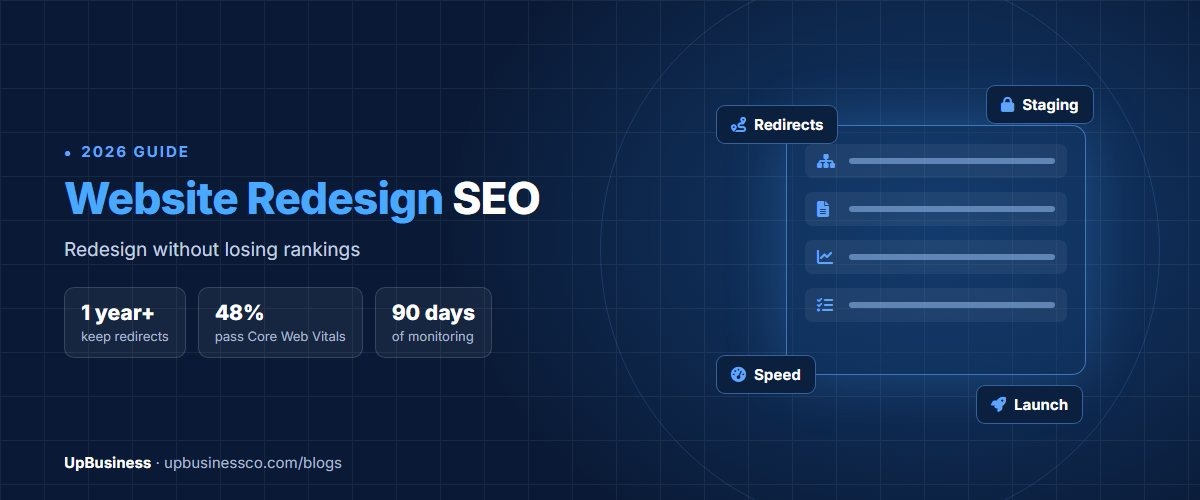
If the site is old and most of the hours go on workarounds, maintenance may no longer be the cheapest option. Our website redesign SEO guide explains how to rebuild without losing search traffic.
When you're ready, post your project with your platform, number of pages and how often the site changes, and verified partner companies can quote a plan. Or compare verified website maintenance companies by TrustScore and project size.