


Browse our curated list of Software Development Companies
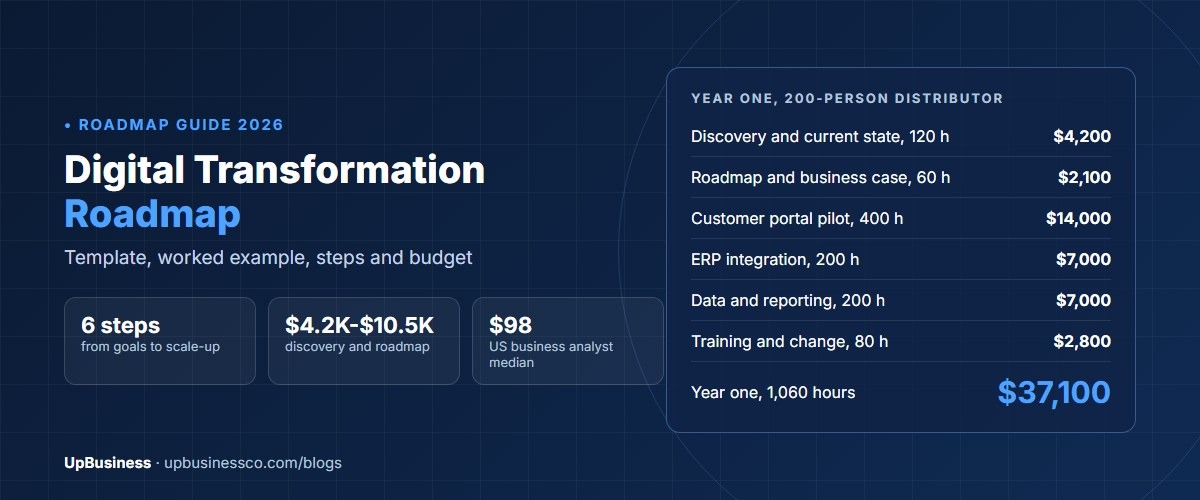
A digital transformation roadmap is a plan that shows which technology changes your business will make, in what order, by when, for what cost and with what result. A good one fits on a few pages. It links each project to a business goal, such as faster orders or lower costs, and it shows who owns each step. Building the roadmap itself usually costs $4,200 to $10,500 with an offshore partner company, before any project starts.
This guide is for founders, operations heads and IT leaders who need a plan their board and teams will actually follow. You'll get a step-by-step method, a fill-in template, a worked example for a 200-person company, cost by phase and a checklist for choosing a partner. US comparison costs use about $98 an hour, the median ceiling rate for business analysts on US government contracts[1].
Key takeaways
- Start with business goals, not tools. Each project on the roadmap should name the goal it serves and the number it will move.
- Most roadmaps have six steps: set goals, assess where you are, pick and rank projects, build the roadmap, run a pilot, then scale.
- Discovery and the roadmap together cost about $4,200 to $10,500 offshore. A first pilot project usually costs $10,500 to $28,000.
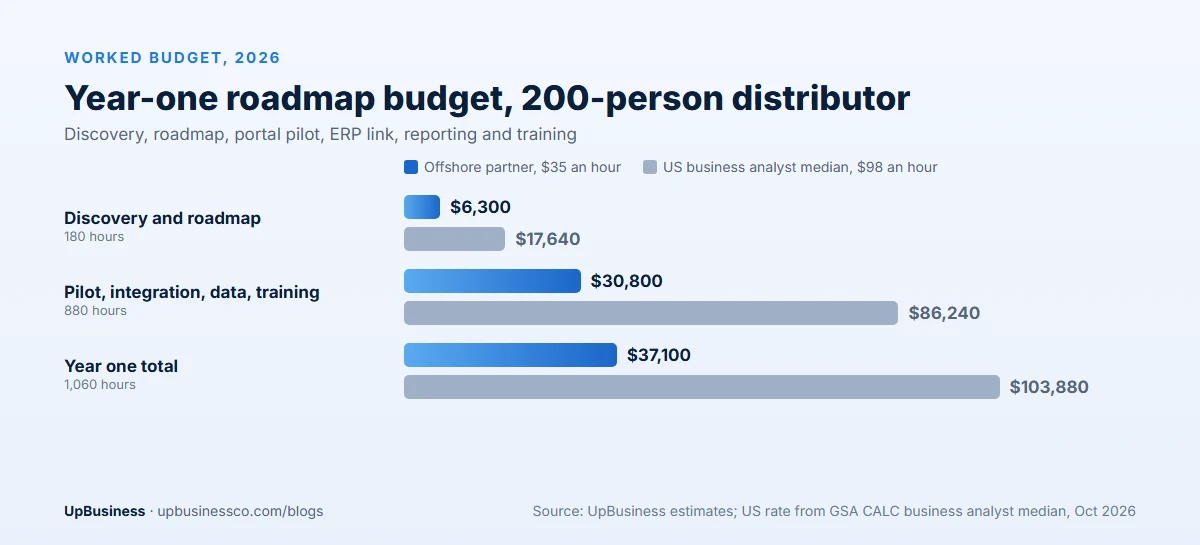
- Our worked example, a 200-person distributor, spends about $37,100 in year one offshore, against about $103,880 at US rates.
- Review the roadmap every quarter. A roadmap nobody updates turns into a wish list.
What Is a Digital Transformation Roadmap?
A digital transformation roadmap turns a broad idea, such as "we need to modernise", into a short list of projects with dates, owners, budgets and targets. It answers five questions. Where are we today? Where do we want to be? Which changes will get us there? In what order? And how will we know it worked?
It is not a list of software to buy. A new CRM or ERP is only useful if it fixes a real problem, such as slow quotes or stock errors. The roadmap keeps every project tied to that problem, so money goes where it makes a difference.
It is also not a one-off document. Business needs change, and some projects will work better than others. The roadmap should be reviewed every quarter and updated when the facts change.
How to Create a Digital Transformation Roadmap in 6 Steps
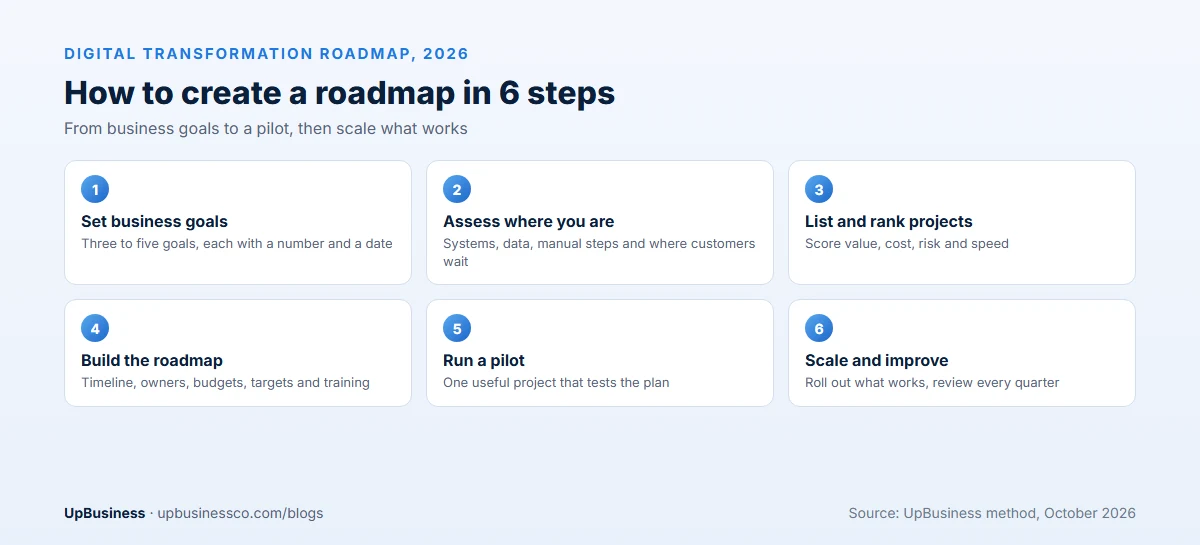
Step 1: Set business goals. Agree three to five goals with your leadership team, each with a number. For example, cut order processing time from two days to four hours, or raise online sales from 10% to 30% of revenue. Goals without numbers are hard to plan for and impossible to check.
Step 2: Assess where you are today. Map how work really happens: the systems you use, where data lives, where people copy and paste between tools, and where customers wait. Talk to the people who do the work, not just their managers. The UK Government Digital Service calls this a discovery phase, where teams learn about users and problems before deciding what to build[2].
Step 3: List and rank possible projects. Write down every change that could help, then score each one on value to the goals, cost, risk and how long it takes. Quick wins with high value go first. Large, risky projects need a pilot before you commit.
Step 4: Build the roadmap and business case. Put the ranked projects on a timeline, usually 12 to 24 months, in phases. Give each project an owner, a budget, a start date and a target. Add the people side: training, new roles and how teams will change the way they work.
Step 5: Run a pilot. Start with one project that is useful on its own and teaches you something. A pilot shows whether your partner, your team and your plan work in practice. Many delivery teams work in phases, such as discovery, alpha, beta and live, testing small before going big[3].
Step 6: Scale, measure and improve. Roll out what worked, drop what didn't and update the roadmap. Track your goal numbers every month and review the whole plan every quarter.
Digital Transformation Roadmap Template
Use this template to write your own roadmap. Each section should fit on one page. The example column shows how a mid-size distributor might fill it in.
| Section | What to write | Example: 200-person distributor |
|---|---|---|
| Vision | One or two sentences on where the business wants to be | Customers order online in minutes, and stock is right every time |
| Business goals | Three to five goals, each with a number and a date | Cut order time from 2 days to 4 hours by month 12 |
| Current state | Main systems, data, manual steps and pain points | Orders by email and phone, stock in spreadsheets, old ERP |
| Projects | Ranked list of changes, each tied to a goal | Customer portal, ERP integration, stock reporting |
| Timeline | Phases over 12 to 24 months with start and end dates | Pilot in months 1 to 6, rollout in months 7 to 18 |
| Owners | One named person per project | Sales head owns the portal, finance head owns reporting |
| Budget | Cost per project and phase, including running costs | $37,100 offshore in year one |
| People and change | Training, new roles and communication plan | Train 40 sales and warehouse staff |
| Risks | Main risks and how you will reduce them | Old ERP data is messy; clean it before the portal goes live |
| Measures | The numbers you will track and how often | Order time, order errors, online share of sales, monthly |
Keep the template short. A roadmap that runs to 80 slides is rarely read. Two to five pages, plus a one-page timeline, is enough for most companies.
Worked Example: Year-One Roadmap for a 200-Person Distributor
Here is how the template turns into a plan and a budget. The company sells industrial parts to 1,500 business customers. Orders arrive by email and phone, staff type them into an old ERP, and stock levels live in spreadsheets. The leadership team wants faster orders, fewer errors and more online sales.
After discovery, the team ranks three projects. A customer portal comes first, because it moves the most orders. ERP integration comes second, because the portal needs live stock and prices. Stock and sales reporting comes third, so managers can track the goals.
| Year-one task | Hours | Offshore ($35/h) | US rate ($98/h) |
|---|---|---|---|
| Discovery and current-state review | 120 | $4,200 | $11,760 |
| Roadmap and business case | 60 | $2,100 | $5,880 |
| Customer portal pilot | 400 | $14,000 | $39,200 |
| ERP integration | 200 | $7,000 | $19,600 |
| Data and reporting | 200 | $7,000 | $19,600 |
| Training and change support | 80 | $2,800 | $7,840 |
| Year-one total | 1,060 | $37,100 | $103,880 |
Software licences, cloud hosting and your own staff time come on top. The portal launches to 100 customers first. If order time and errors improve as planned, the company opens it to all customers and plans the next phase, such as automated reordering.
Roadmap Timeline Example: Months 1 to 18
Here is how the distributor's plan looks on a timeline. Each phase has a clear end point, so the leadership team can decide whether to carry on.
Months 1 to 2: discovery and roadmap. The partner interviews sales, warehouse and finance staff, maps the order process and reviews the ERP. The team agrees the three goals, ranks the projects and signs off the budget for the pilot.
Months 3 to 6: customer portal pilot. The portal is built and connected to live stock and prices. 100 regular customers start using it. The team tracks order time and errors every week and fixes problems quickly.
Months 7 to 9: reporting and wider rollout. Stock and sales dashboards go live for managers. If the pilot met its targets, the portal opens to all 1,500 customers, with sales staff helping key accounts switch.
Months 10 to 18: next phase. With clean data and a working portal, the company plans automated reordering for regular customers and a review of its old ERP. These go back through the same scoring before any money is spent.
What a Digital Transformation Roadmap Costs in 2026
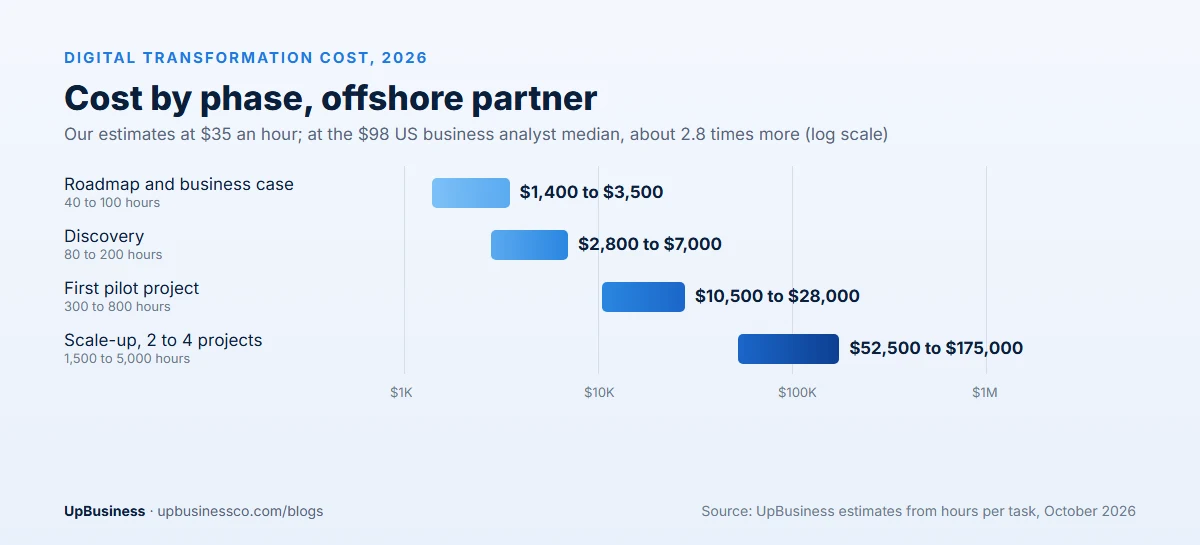
Costs depend on the size of the business, how many systems are involved and how much change the plan needs. Our estimates below use an offshore partner rate of $35 an hour. For the US comparison, we use about $98 an hour, the median ceiling rate across 2,327 business analyst rates on US government (GSA) contracts. Ceiling rates are the most a contractor may charge government buyers, so private quotes vary around them. Senior transformation consultants usually charge more than business analysts.
| Phase | Hours | Offshore partner ($35/h) | US rate ($98/h) |
|---|---|---|---|
| Discovery and current-state assessment | 80 to 200 | $2,800 to $7,000 | $7,840 to $19,600 |
| Roadmap and business case | 40 to 100 | $1,400 to $3,500 | $3,920 to $9,800 |
| First pilot project | 300 to 800 | $10,500 to $28,000 | $29,400 to $78,400 |
| Scale-up, 2 to 4 projects | 1,500 to 5,000 | $52,500 to $175,000 | $147,000 to $490,000 |
| Run and improve | 40 to 160 a month | $1,400 to $5,600 a month | $3,920 to $15,680 a month |
Discovery and the roadmap are the cheapest phases, and the most important. Spending $4,200 to $10,500 on a clear plan can save far more by stopping the wrong project early.
Common Digital Transformation Projects
Most roadmaps draw from the same handful of project types. Here is what each usually involves.
- Customer portals and online ordering. Let customers order, pay, track and re-order without calling. Our website development cost guide covers build costs.
- ERP and CRM upgrades or integrations. Connect sales, finance, stock and service so data is typed once.
- Data and reporting. Bring numbers from many tools into one place for live dashboards. See our data engineering services cost guide.
- Process automation. Replace repeated manual steps, such as invoice matching or approvals.
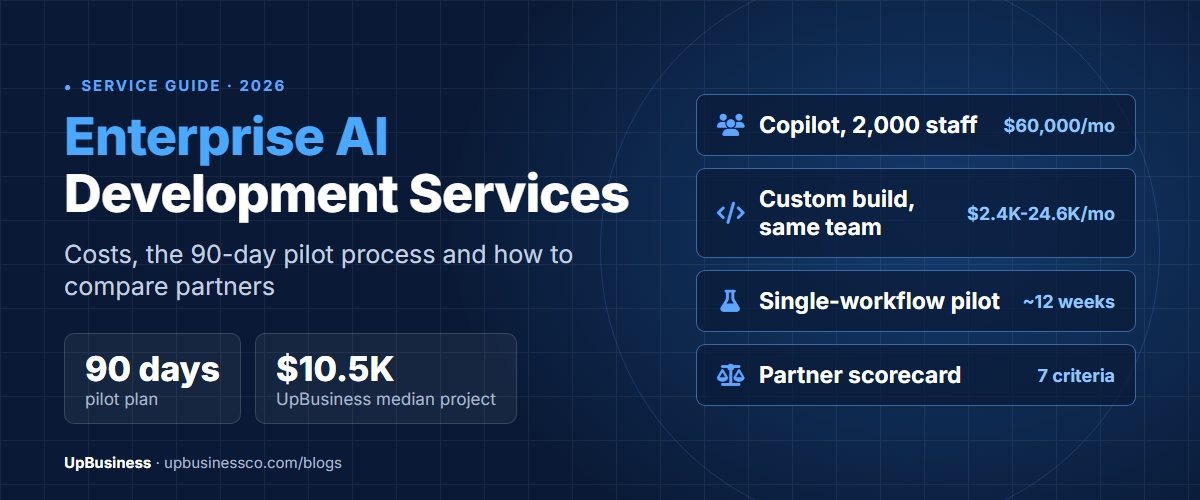
- AI features. Add AI where it clearly saves time, such as answering common customer questions. Our AI integration services guide and enterprise AI development guide explain the options.
- Cloud moves. Move old on-site systems to the cloud for easier access and upkeep.
Roadmaps by Company Size
The method stays the same at every size, but the scale changes.
Small companies, up to 50 staff, usually need one or two projects a year, such as moving from spreadsheets to a proper CRM or adding online payments. Discovery can take a week or two. The roadmap might be a two-page plan owned by the founder.
Mid-size companies, 50 to 500 staff, often juggle several old systems and teams with different needs. They benefit most from a formal roadmap, because it stops each department buying its own tools. Expect four to ten weeks of discovery and planning, and two or three projects in the first year.
Large companies run many projects at once across countries and business units. Their roadmaps need a central team to track progress, shared rules for data and security, and a steady review cycle. Costs scale up accordingly, and scale-up phases can run well past $175,000 offshore.
How to Rank Projects on Your Roadmap
A simple scoring table stops the loudest voice in the room from deciding the order. Score each project from 1 to 5 on four things, then add them up.
| Score | Question to ask | High score means |
|---|---|---|
| Value | How much does it move our goal numbers? | Big effect on a key goal |
| Cost | How much will it cost to build and run? | Low cost |
| Risk | How likely is it to fail or run late? | Low risk |
| Speed | How soon will we see results? | Results within six months |
Projects with high totals go first. Projects with high value but high risk become pilots. Projects with low value drop off the roadmap, however exciting the technology sounds.
The People Side of the Roadmap
Many projects fail because people don't use the new system, not because the code was wrong. Plan for people from the start.
Name a sponsor on the leadership team for each phase. Involve the staff who do the work in discovery and testing, so the new tools fit how they really work. Budget for training, and plan a period where old and new systems run side by side. Tell people early what will change for them and why. In our worked example, training and change support is 80 of the 1,060 hours. That is a small share of the budget, but it often decides whether the project pays off.
How to Measure Progress
Pick a few numbers for each goal and track them from day one. Measure the starting point during discovery, or you won't be able to show what changed.
- Speed: time to process an order, answer a request or close the month.
- Quality: order errors, returns, complaints or data fixes.
- Use: share of customers or staff using the new tools each week.
- Money: cost per order, revenue from online channels and project spend against budget.
Show these on one simple dashboard that everyone can see, and review it together every month. If a number is not moving after a pilot, ask why before you scale the project.
Red Flags in a Digital Transformation Proposal
- Tools before goals. If a proposal names software before it names your problems, be careful.
- No discovery. A fixed price for a large plan without talking to your staff is a guess.
- Everything at once. Big-bang launches carry the most risk. Ask for a pilot first.
- No owners or numbers. Every project needs a named owner and a target.
- No running costs. Licences, hosting and support continue after launch.
- No plan for people. Training and change support should be in the budget.
Build In-House, Hire a Partner or Mix Both?
Few companies have every skill a roadmap needs on their own staff. Most use a mix of their own people and outside help, and the right balance depends on how much change is planned.
In-house teams know the business best and stay after the project ends. They are the right owners for goals, decisions and day-to-day use. But hiring architects, developers and data engineers for a short burst of work is slow and costly.
Partner companies bring people who have done similar projects before, and you can add or remove them as the work changes. Offshore partners can cut build costs by around two thirds compared with US rates, as our tables show. The risk is that knowledge leaves with them, so ask for documentation and training as part of every project.
A mix works for most mid-size companies. Keep ownership, goals and one or two technical leads in-house. Use a partner for discovery, building and extra capacity. Plan from the start how the partner will hand over each system, so your team can run it after launch.
How to Choose a Digital Transformation Partner
Ask these questions before you sign:
- Have you worked with companies of our size and industry?
- How will you run discovery, and who will you talk to?
- Can you show a past roadmap and what happened after it, with names removed?
- Do you build as well as plan, or will we need another partner?
- How do you handle training and change for our staff?
- How often will we review the roadmap together?
Some companies use one partner to plan and others to build. That can work, but the handover needs care. Our AI consulting services guide covers planning-only partners, and our guide to custom software development companies in India covers build partners.
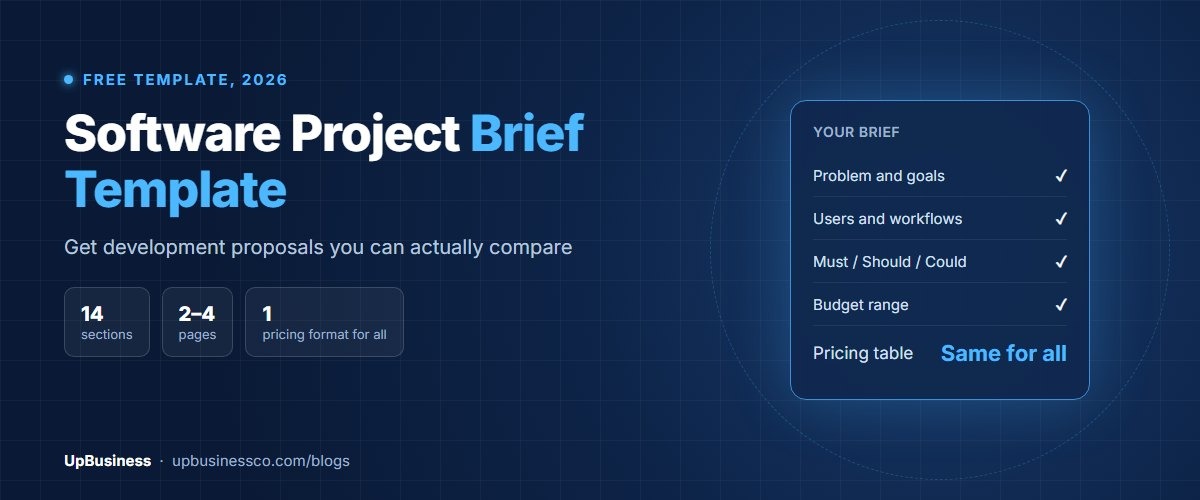
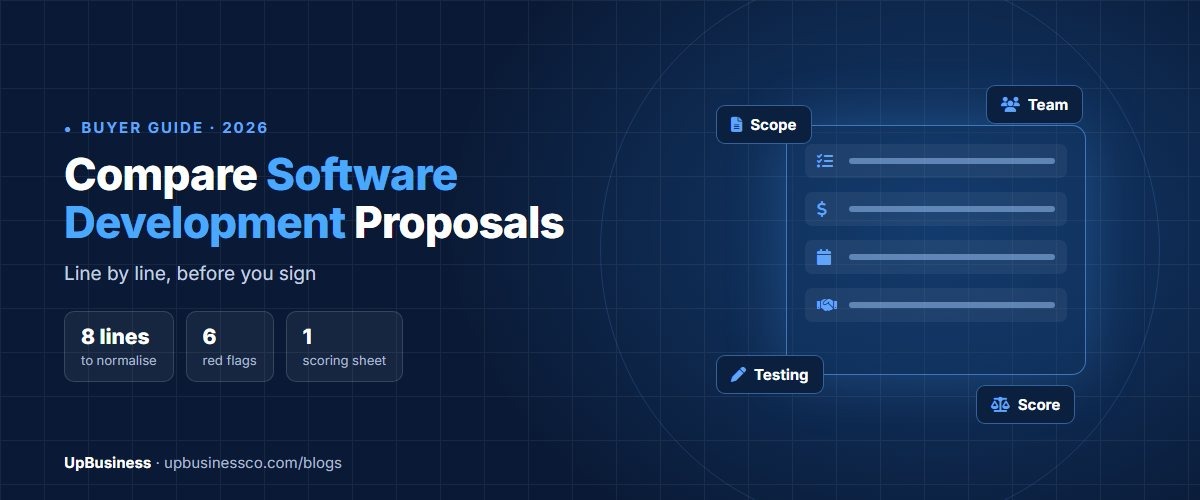
When you collect quotes, our software project brief template helps you describe the work, and our guide to comparing software development proposals shows how to line quotes up. For wider price ranges, see our software, AI and marketing cost benchmark.
When you're ready, post your project on UpBusiness with your goals, current systems and budget, and we'll match you with verified software development partner companies that plan and deliver digital transformation work.